
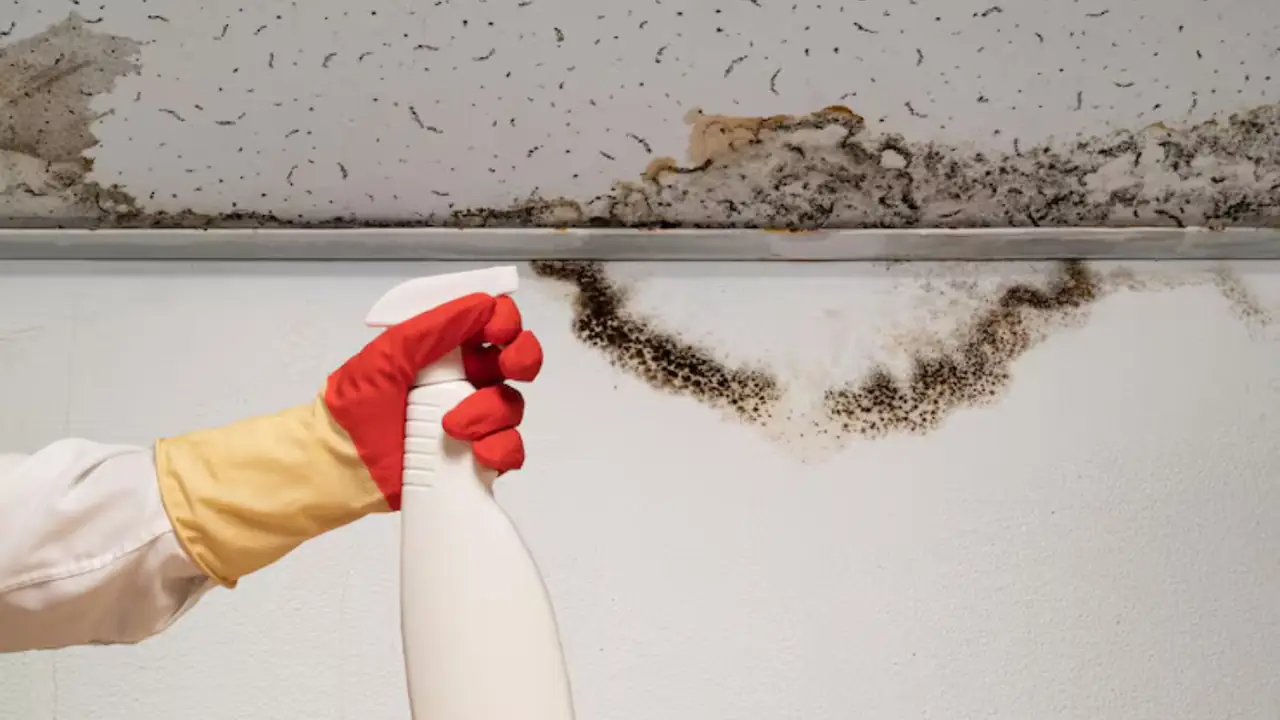
Here is the useful part first. "Black mold" is a color, not a species, and a dark spot on a ceiling is not proof of anything until you know what is feeding it. Early ceiling mold usually looks like small fuzzy or speckled dots that spread outward, often with a musty smell, and it sits where moisture collects. Dirt and old water stains look different, and the difference is worth learning.
This page is about identification and safe first steps for homes in Amesbury, MA. It does not diagnose anything. Questions about how a spot might affect your health belong with a physician.
What early ceiling mold looks like
New growth often starts as pinpoint dots in clusters, in colors from black and green to gray or white. Over a few weeks the dots merge into patches with a soft, slightly raised look. The edges are usually irregular rather than a clean ring.
Check the ceiling below a bathroom, near an exterior wall corner, beneath a roof line and around a vent or light fixture. Those are the places where steam, a slow leak or cold surfaces meet warm indoor air. A spot that comes back after you paint over it is a warning sign.
Mold, dirt or an old water stain
Three things get mistaken for each other. A side by side look helps.
| Clue | Mold | Dirt or soot | Old water stain |
|---|---|---|---|
| Texture | Fuzzy, dotted or slightly raised | Flat, powdery | Flat, smooth |
| Shape | Spreading patches with ragged edges | Streaks along air paths or above fixtures | Ring with a defined edge |
| Smell | Musty or earthy | Little to none | Often none once dry |
| Change over time | Grows, especially after humid days | Stays about the same | Stays the same until new water arrives |
| Wiping test | Smears and may return | Often wipes off | Does not wipe off |
If a small spot wipes away with detergent and water and does not return, it was probably surface dirt. If it comes back, there is moisture behind it, and the surface is only part of the story.
Why the moisture source matters most
Mold needs moisture. Without it, cleaning the ceiling only resets the clock. Common sources are a leaking roof, a failing bathroom fan duct, a supply line above the ceiling, condensation on a cold attic surface or a tub drain that weeps into the framing.
A restoration crew finds the source with a moisture meter and a thermal imaging camera, then checks how far the wet area runs. A ceiling can look small from below while the insulation above it is wet over a much larger area. Fixing the leak comes before any cleanup. Our mold remediation page explains how containment, removal and drying are planned once the source is dealt with.
Water still spreading or mold already showing? Dispatch is open around the clock.
(978) 252-8637What to do and what not to do
Take these steps in order, and keep it simple.
- Stop adding moisture.Run the bathroom fan, close the shower door and fix any drip you can reach safely.
- Photograph the spot.Take pictures with a ruler or coin for scale so you can see whether it grows.
- Keep the room closed off.Shut the door and avoid running a fan that blows across the area.
- Call for an inspection.A trained inspector can tell mold from dirt and find the water behind it.
- Wait on repainting.Paint over mold or a wet ceiling hides the problem and rarely holds.
Do not scrub dry mold with a brush, because that sends spores into the air. Do not spray bleach on drywall or ceiling tile, since it does not reach below the surface of porous material. Do not mix cleaning products. Do not poke at a bulging ceiling directly below a leak, as it may hold a pocket of water.
Amesbury local note: timing and humid summers
The Massachusetts homeowner guide on mold says to dry wet areas within 24 hours. If a ceiling got wet from a leak or a storm, count from the moment you noticed it, and call within that first day so drying equipment can start before growth takes hold.
The state Housing Code, 105 CMR 410, requires leaks and floods to be dried within 48 hours. For tenants, that is a useful benchmark when you report a wet ceiling in writing to a landlord, so keep the date and photos.
NWS data for the Boston area puts annual precipitation at 43.59 inches, which means roofs and flashing in Amesbury get tested often. After a heavy storm, look at ceilings under the roof line within a day or two, since a slow roof leak shows up there first.
When the ceiling has to come down
Small spots on hard, painted surfaces can sometimes be cleaned. Mold in drywall, plaster or insulation cannot be cleaned in place, so the material is cut out, bagged and removed, usually behind plastic containment with HEPA filtration. Practice for this work is described in the ANSI/IICRC S520 standard, and it is fair to ask any company whether its crews follow it.
Costs depend on the area affected, the materials, containment needs, drying days and the rebuild afterward. Scope and price are explained before work starts. If the ceiling had been wet for days, the water damage cleanup page covers debris and odor work that follows removal. Homes in neighboring towns follow the same logic, and our Salisbury and Haverhill pages cover those service areas.
No company can promise that mold will not return. The honest answer is that it stays gone only if the moisture stays gone.
Questions about ceiling mold
Is black mold on a ceiling dangerous?
This page cannot answer health questions. Color does not identify the type of mold, and health concerns belong with a physician. What you can do is find and fix the moisture, and limit disturbance of the area.
Can I tell mold from a stain without testing?
Often, yes. Mold is fuzzy or dotted and spreads, a water stain is flat with a ring. If you are unsure, an inspector can tell you, and testing is an option when the answer matters.
Will painting over it work?
Not for long. Paint covers the surface, but moisture and growth remain underneath, and the spot returns. The material and the source need attention first.
How fast can mold show up after a ceiling leak?
Wet drywall and insulation can grow mold within a day or two in a warm, closed space. That is why state guidance calls for drying within 24 hours.
Does a wet Amesbury ceiling in a rental fall under the Housing Code?
The state Housing Code, 105 CMR 410, requires leaks and floods to be dried within 48 hours. Report the leak to your landlord in writing and keep dates and photos.
If a ceiling spot is growing or the room smells musty, the 24/7 line at (978) 252-8637 can explain how an inspection and scope work, any hour of the day.