
Water mitigation is the emergency stage of a water loss, and the clock is already running if your walls or floors are wet right now. Our dispatch line is open 24/7.
While you wait for a crew, shut off the water source if it is safe, switch off power to wet rooms only if the panel is dry, and lift furniture and electronics out of the water. Then call (978) 252-8637 and describe what is wet and for how long.
Mitigation means stopping further damage, and it is a different job from rebuilding. Crews extract standing water, open up wet material that cannot dry in place, set drying equipment and track moisture until the structure reaches a dry standard. Repairs such as new drywall and paint come later and belong to water damage repair.
When water mitigation is an emergency
Treat it as an emergency when water is still entering the building, when more than a small area is wet, when the water touches electrical equipment or when the area has been wet for most of a day. A supply line that failed under a kitchen sink at midnight is an emergency even if the puddle looks small, because water travels under cabinets and into wall cavities where you cannot see it.
If sewage is involved or water is near the panel, stay out of the space. Call the utility or 911 about any electrical or gas risk before you call the restoration line. Never promise yourself that a wet wall will dry on its own. The Massachusetts homeowner guide on mold says wet areas should be dried within 24 hours, and the state Housing Code requires leaks and floods to be dried within 48 hours.
My wall is wet and I do not know what to do
Most people searching for help do not use the trade term. They type things like "water coming through the ceiling" or "wall feels damp and smells musty." The word for what you need is mitigation. It covers finding where the water went, removing it and drying the building materials before they rot or grow mold.
The fastest way to learn how far water traveled is a moisture meter and a thermal imaging camera. A wall that looks fine can hold wet insulation, and a floor that feels dry on top can be saturated underneath. Tell dispatch where the water started and how long ago, and the crew will plan the scope from that.
How crews stop the damage
A mitigation job follows the same order on almost every loss. The details change with the water category and the materials involved, a framework laid out in the ANSI/IICRC S500 standard for water damage restoration. Ask any company you call whether its crews work to that standard.
- Stop and contain.The source is shut off or repaired temporarily, and wet areas are separated from dry ones.
- Extract.Pumps, wet vacuums and extraction units remove standing and pooled water first, because every gallon removed by machine is one the dehumidifiers do not have to pull from the air.
- Open and remove.Saturated carpet pad, wet insulation and drywall that cannot dry are removed. Baseboards may come off and small holes may be drilled to ventilate wall cavities.
- Map moisture.Meters and thermal imaging record where the water is and set the baseline for drying.
- Dry and monitor.Air movers and dehumidifiers run, and crews return to take readings until the materials reach a dry standard.
Water still spreading or mold already showing? Dispatch is open around the clock.
(978) 252-8637Structural drying and equipment
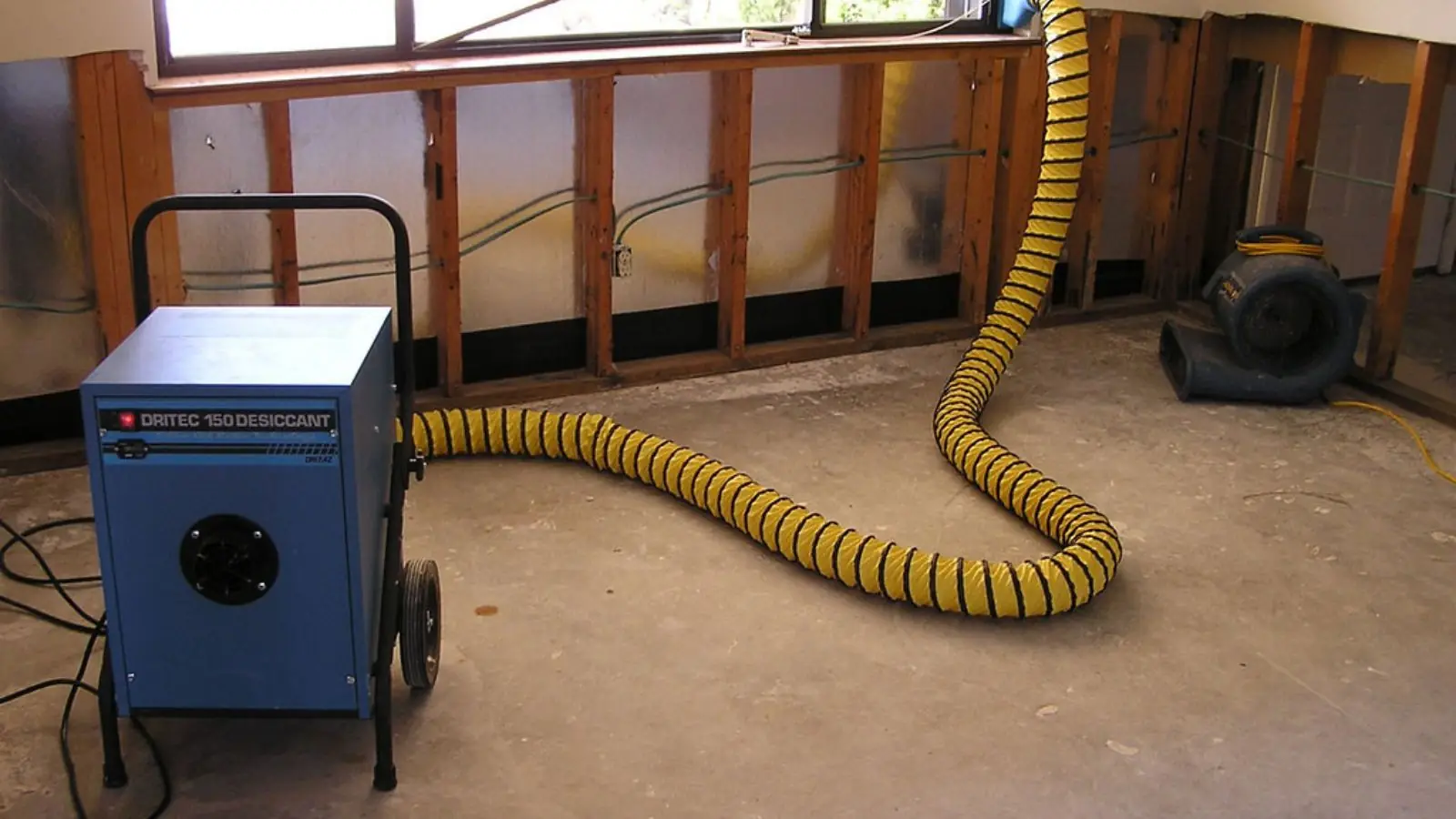
Structural drying is the part of mitigation where equipment does the work. Air movers push dry air across wet surfaces and into cavities. LGR dehumidifiers remove moisture from the air so it does not settle back into drywall and framing, and desiccant units are used in cold or very damp conditions. Drying usually takes several days, and the exact number depends on the materials, how wet they got and how quickly the work started.
In a New England basement or mill-era building, thick masonry and stone foundations hold water longer than modern wall systems. A crew will often run more monitoring visits there than in a newer slab house. Equipment is placed to create airflow through the whole affected area, not only the visible wet spot, and it is moved as readings change.
Daily readings tell the crew when to remove equipment. Dry means the numbers match a dry reference reading from unaffected material in the same building. A room that feels dry to the touch has not passed that test. If you hear equipment shut off by a landlord or neighbor before readings are done, ask for the moisture log.
Mitigation versus cleanup versus repair
Each stage of a loss has its own scope, and mixing them up is how people end up paying twice or skipping something. The table below shows where each begins and ends.
| Stage | What it covers | Where to read more |
|---|---|---|
| Mitigation | Stopping damage, extraction, tear-out, drying equipment | This page |
| Cleanup | Debris removal, sanitizing, deodorizing after the water is stopped | Water damage cleanup |
| Repair | Drywall, insulation, flooring, paint, cabinets | Water damage repair |
Good mitigation makes the repair smaller. Early drying often saves flooring, trim and cabinets that would otherwise be torn out.
What mitigation costs
Price depends on what is wet and how long equipment must run. Dispatch explains the scope and the price before any work starts, and crews do not start drying equipment without an agreed scope.
| Cost factor | Effect on the job |
|---|---|
| Water category | Category 2 and 3 water means removal of porous materials and disinfection |
| Affected square footage | More area means more air movers and dehumidifiers |
| Materials | Hardwood, plaster and thick insulation need longer drying |
| Drying days | Equipment is monitored and adjusted until readings reach a dry standard |
| Rebuild scope | Repairs are priced separately after the structure is dry |
Want your real number? Call (978) 252-8637.
Insurance and documentation
Sudden and accidental water damage, such as a burst pipe or a failed supply line, is often covered by a homeowners policy. Gradual leaks and neglect often are not, and flood damage usually needs separate flood insurance. Check your policy or ask your insurer. The Massachusetts Division of Insurance advises photographing the exterior and interior, including water height, and notes that sump pump failure and water backup need an added endorsement.
Crews log moisture readings and equipment days, which gives you a record to send to your adjuster. Keep receipts for emergency steps you take yourself, such as pump rental or a plumber's call.
Amesbury buildings and mitigation
Amesbury has a lot of older buildings. A state housing plan citing American Community Survey data listed 35 percent of the city's housing units as built before 1940. Older homes often have balloon framing, which lets water run from a second-floor leak down inside the walls to the basement. They also have stone or brick foundations, which hold moisture.
Downtown, the city's own resilience matrix names the Powow River retaining wall and the Upper Millyard among the flood concerns, so ground floors there deserve a close look after heavy rain.
If your property is outside Amesbury, our Newburyport and Merrimac pages cover the towns on either side.
Water mitigation questions
Do you handle water mitigation emergencies at night or on weekends in Amesbury?
Yes. Dispatch is open 24/7, every day of the year, and active water is treated as a priority. Same-day response is available when crews are available. We do not promise an arrival time, but dispatch will tell you what to do while you wait.
How long does structural drying take?
Most jobs take several days of equipment run time. The number depends on the materials, the water category and how fast drying started. Crews take moisture readings and remove equipment only when the structure reaches a dry standard.
Is mitigation covered by insurance?
Emergency mitigation after sudden and accidental damage is often covered, but coverage depends on your policy and the cause. Flood damage usually needs a separate flood policy. Check your policy and ask your insurer.
Can I rent air movers and dehumidifiers myself?
You can, but renting equipment does not tell you where the water went or when the structure is dry. A crew maps moisture and monitors readings, which is the part that prevents hidden mold.
What is the difference between mitigation and restoration?
Mitigation stops damage and dries the building in the first days. Restoration is the full job, including cleanup and rebuilding, and mitigation is its first stage.