
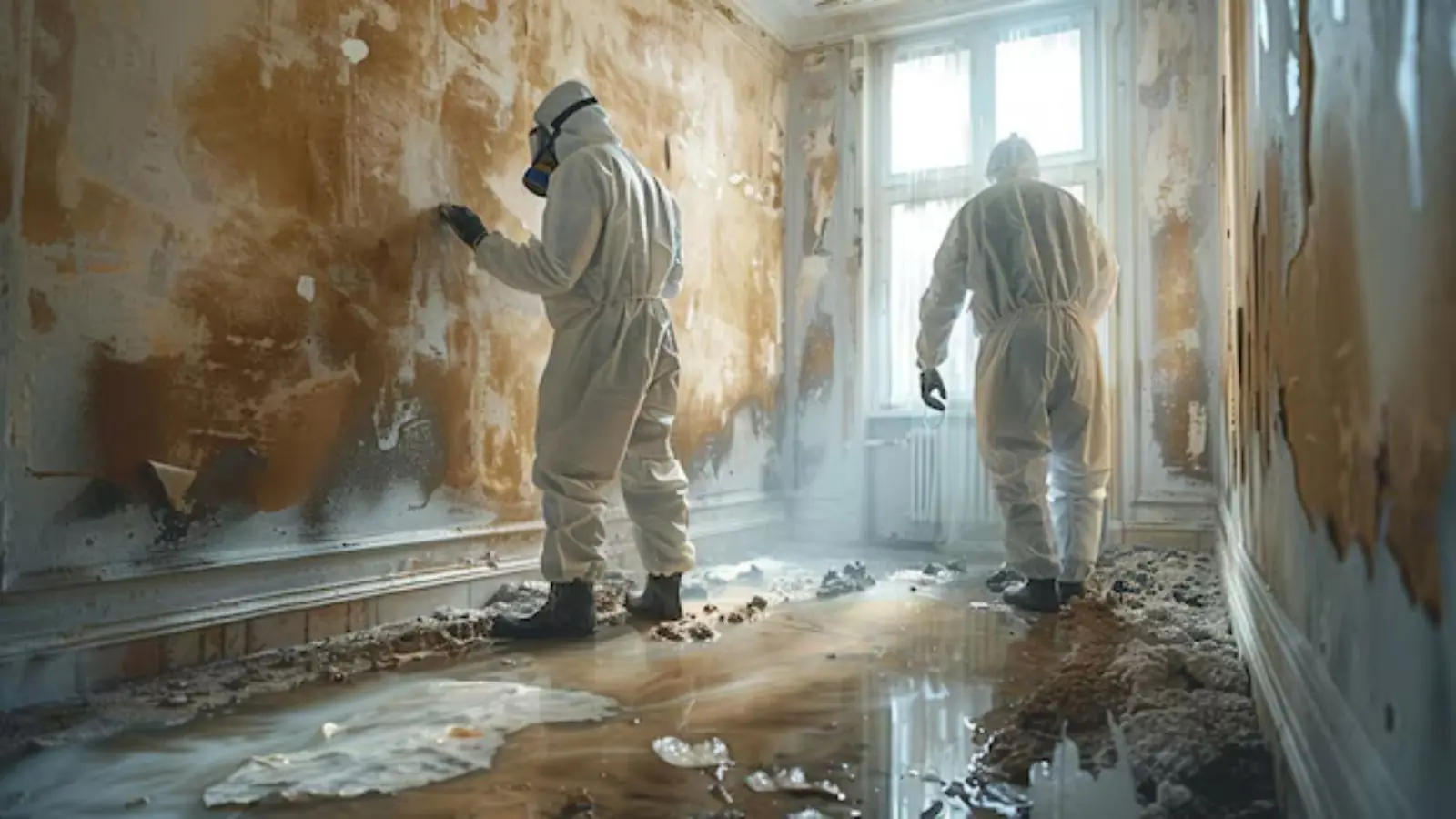
Mold remediation is the controlled removal of mold growth and the correction of the moisture that caused it. In Amesbury, MA, most calls follow a leak: a toilet supply line, a sink drain, a roof or an air conditioner condensate line. If you see mold after recent water damage, call (978) 252-8637 and dispatch will explain how an inspection and scope work. The line is open 24/7.
Mold needs moisture to grow. It does not appear on a dry surface, and removing it without removing the water source only starts the clock again. The Massachusetts homeowner guide says to dry wet areas within 24 hours and to discard porous materials that cannot be dried quickly. For that reason, mold work often begins with water mitigation.
Signs of mold after water damage
Mold shows up as fuzzy or speckled patches in green, black, white or gray, and it often arrives with a musty smell. Check ceilings under bathrooms and roofs, the backs of closets on exterior walls, the area around windows, the underside of basement stairs and the base of drywall in basements. A stain that returns after painting is a warning sign.
Not every dark spot is mold. Dirt, soot and old water stains can look similar. A trained inspector can tell you what you have, and testing is an option when the answer matters, such as before a home sale. Questions about health effects belong with your physician, and this page makes no health claims.
How mold remediation works
Mold remediation practice is described in the ANSI/IICRC S520 standard for professional mold remediation. Ask any company you call whether its crews work to S520. The core steps are the same on most jobs.
- Inspect and fix the source.Moisture meters and thermal imaging find where water entered, and the leak is repaired before cleanup.
- Contain.Plastic barriers and negative air machines keep spores from spreading to clean rooms.
- Remove.Moldy porous materials such as drywall and insulation are cut out, bagged and removed. Framing is cleaned with HEPA vacuuming and wiping.
- Dry.Air movers and dehumidifiers bring the area to a dry standard.
- Verify.A visual check and, if you choose, independent testing confirm the work.
Mold removal and black mold cleanup
Black mold is a color, not a species, and many molds look dark. What matters is how much there is and what material it is growing on. Small spots on hard, nonporous surfaces can often be cleaned with detergent and water. Growth on drywall, insulation, ceiling tile and carpet cannot be cleaned in place and is removed.
Bleach is a poor tool on porous surfaces because it does not reach roots below the surface. Do not mix cleaning products. Do not brush dry mold, because that releases spores into the air. If the affected area is large or you are unsure, stop and call. No product will promise that mold will not return, and the honest answer is that mold stays away only when moisture does.
Water still spreading or mold already showing? Dispatch is open around the clock.
(978) 252-8637Mold after water damage
Mold after a leak is a timeline problem. Wet drywall and insulation can grow mold within a day or two in a warm, closed space. The Massachusetts Housing Code requires leaks and floods to be dried within 48 hours, which is a useful benchmark for owners and landlords.
If your house had a flood, a burst pipe or a roof leak that was not dried quickly, check behind baseboards and inside the wall. Our flood damage restoration page covers the heavier events, and water damage cleanup covers debris removal that heads off mold. If you are buying or selling, ask whether the lender requires clearance, and read the testing section below.
Mold testing, inspection and clearance
Inspection finds the moisture source and the extent of growth. Testing can sample air or surfaces. Clearance testing happens after remediation to check that the area meets the target set before the work. Independent testers are separate from the remediation company, which avoids a conflict of interest.
Real estate deals often hinge on this. A buyer's lender may not fund a loan until a mold issue is documented as resolved, and a seller may need written results.
This page does not promise that any lender will accept a result, so ask your lender what it requires. The state's guidance is also clear that mold work is not a licensed trade in Massachusetts. The state guide says no license is required to perform mold remediation, so ask any company how it follows S520 and what it will document.
Mold in Amesbury homes
Amesbury's older buildings hold moisture. A state housing plan citing American Community Survey data put 35 percent of the city's units as built before 1940, and many of those have stone foundations and basements that stay damp. Near the Powow River, Lake Gardner and the Merrimack, humidity rises in summer and condensation shows up on cold basement walls.
If your home was built before 1978, the EPA's Renovation, Repair and Painting rule applies to paid work that disturbs paint, so ask any contractor whether they follow it. Do not cut into painted plaster or trim until you know.
What mold remediation costs
Cost depends on how much mold there is and what it is growing on. Dispatch explains the scope and price before work starts.
| Cost factor | Why it matters |
|---|---|
| Area affected | More growth means more containment and removal |
| Materials involved | Drywall and insulation are removed, framing is cleaned |
| Containment and air filtration | Larger jobs need barriers and negative air machines |
| Drying days | The area must reach a dry standard before rebuild |
| Rebuild scope | Replacing removed materials is priced separately, see water damage repair |
Want your real number? Call (978) 252-8637.
Insurance and mold
Mold coverage varies widely. Some policies cover mold only when it follows a covered water loss, and some limit or exclude it. Check your policy and ask your insurer, and photograph the damage and the moisture source before work starts.
Mold remediation questions
What should I do if I find mold after a leak?
Stop the water source, keep the area closed off, and call. Do not brush or vacuum dry mold. Dispatch can explain the inspection and scope.
Can I clean mold myself?
Small spots on hard surfaces can often be cleaned with detergent and water. Mold on drywall, insulation or in large areas needs removal and containment.
Do I need a licensed mold remediator in Massachusetts?
The state homeowner guide says no license is required to perform mold remediation in Massachusetts. Ask any company how it follows S520 and what it documents.
Does bleach kill mold?
Bleach is a poor choice on porous surfaces because it does not reach below the surface. Removal of the damaged material is the dependable fix.
Do I need clearance testing for a home sale?
It depends on the buyer and lender. Ask them what they require, and use an independent tester if you want results separate from the remediation company.
Is mold remediation covered by insurance?
Sometimes, if it follows a covered water loss. Check your policy and ask your insurer.
Our Newburyport page covers the city to the south.