
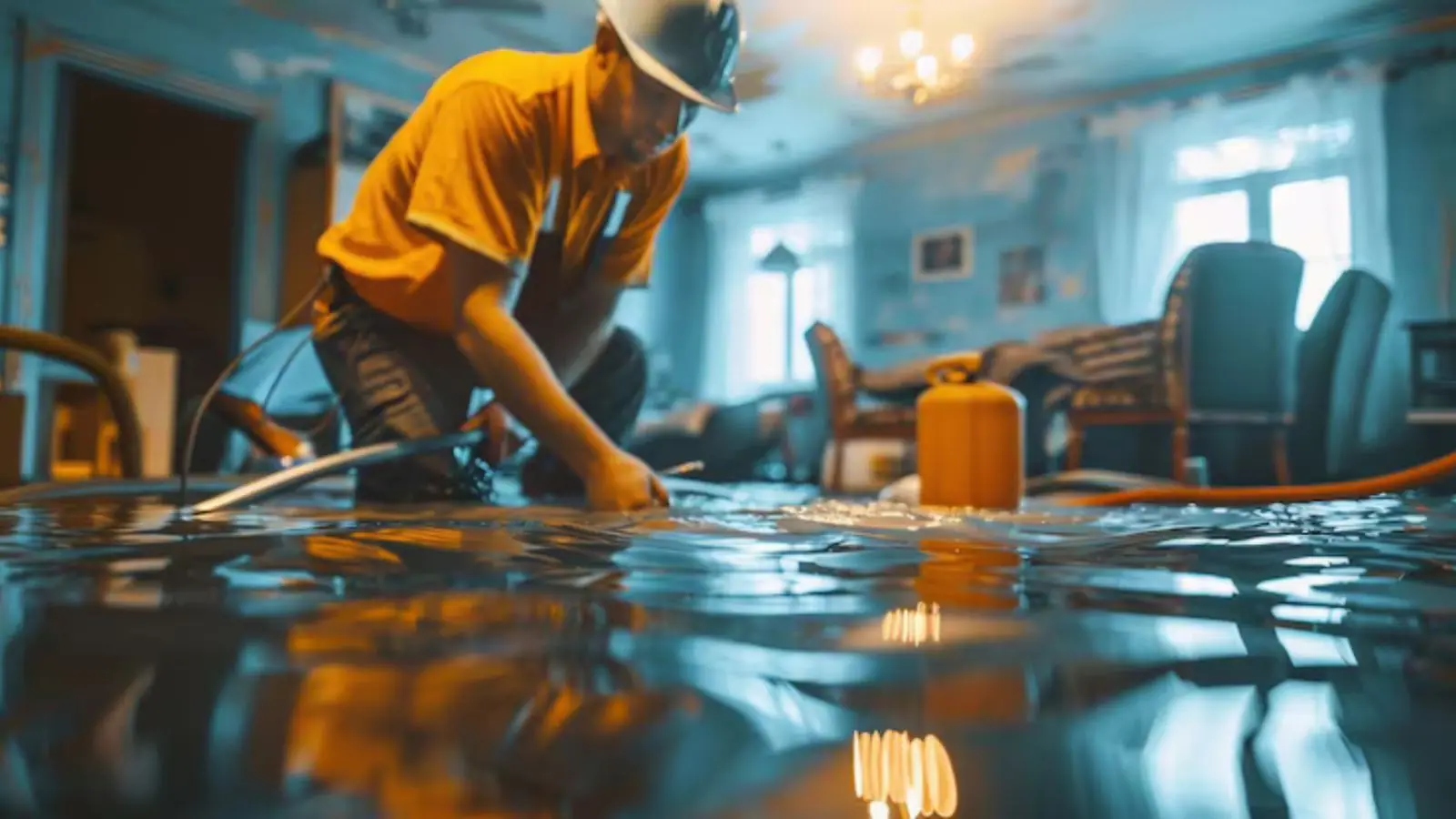
Water damage cleanup is the removal and sanitizing work that follows once the water has stopped, and the first 48 hours matter most. If you are standing in a wet home right now, call our 24/7 dispatch line at (978) 252-8637. While you wait, keep children and pets out, wear gloves and boots if you must go in, and do not run a household vacuum on wet floors.
Cleanup answers a different question than drying. Water mitigation asks how to stop the damage and dry the structure. Cleanup asks what in the building has to leave, what can be saved and how to leave the space clean. The two often run side by side, but they are separate scopes and separate costs.
When cleanup is an emergency
Cleanup becomes urgent when the water was not clean. Water from a washing machine, a dishwasher or a toilet overflow carries bacteria. Sewage and river water carry far more. The longer wet porous material sits, the more of it turns from salvageable to waste, and the faster odor and mold set in.
If you see sewage, a visible sheen or a strong smell, stay out of the space and call the restoration line. If water is near outlets or the panel, call the utility or 911 about the electrical risk first. Do not carry soaked furniture through the house, because contaminated water spreads into dry rooms on shoes and cushions.
What gets removed and what gets saved
Cleanup is a series of decisions item by item. Hard, nonporous surfaces such as tile, metal and sealed concrete can usually be cleaned and sanitized. Porous materials such as carpet pad, mattresses, upholstered furniture and insulation are harder. If they were soaked with contaminated water, they usually go.
The Massachusetts homeowner guide on mold advises discarding porous materials that cannot be dried quickly. That is the rule behind most tear-out decisions, and a crew should explain each one before it is made. Photograph items before they are discarded so you have a record for your insurer.
| Material | Clean water (Category 1) | Contaminated water (Category 2 or 3) |
|---|---|---|
| Carpet and pad | Pad often replaced, carpet may be dried and kept | Both usually removed |
| Drywall | Dried in place when caught fast | Cut out and replaced |
| Hardwood and laminate | Dried with specialized equipment, results vary | Usually removed |
| Tile and sealed concrete | Cleaned and dried | Cleaned and sanitized |
| Upholstery and mattresses | Often saved if dried quickly | Usually discarded |
How a cleanup job runs
Crews sort and treat materials by water category as the ANSI/IICRC S500 standard describes it. Ask any company you call whether its crews follow that standard.
- Assess and sort.The crew checks the water category and sorts materials into keep, clean and remove.
- Remove debris.Wet drywall, insulation, pad and contents leave the building in bags and bins rather than through the house.
- Clean surfaces.Framing, concrete and hard surfaces are scrubbed and treated with antimicrobial products suited to the water category.
- Deodorize.Odor is treated at its source, using HEPA air filtration and treatment of the cleaned surfaces rather than a spray over wet materials.
- Verify.Readings and a final walk-through confirm the space is dry and ready for repair.
Water still spreading or mold already showing? Dispatch is open around the clock.
(978) 252-8637Contents, odor and what cleanup does not do
Cleanup includes handling contents, but only what is practical. Photos, papers and small items can often be dried and cleaned. Large, soaked furniture is a harder call. Ask the crew to list what they recommend discarding and why, and keep that list with your claim records.
Odor control means removing the cause. A sprayed fragrance does not fix wet insulation behind a wall. If a smell returns after cleanup, there is likely still moisture in the structure, and the crew should check again with a meter. Cleanup does not rebuild the space, which is the scope of water damage repair, and it does not waterproof the basement.
Local conditions in Amesbury
Basements in Amesbury's older neighborhoods often have stone or rubble foundations and a dirt or thin concrete floor. A state housing plan citing American Community Survey data put 35 percent of the city's units as built before 1940. In those homes, wet storage boxes and wood shelving soak up water quickly and turn into debris within days.
After a flash flood in 2023, the city told residents with damage to file an insurance claim right away and suggested a sump pump for homes that regularly flood.
It also told people to expect that FEMA relief might be unlikely. In practice that means you should photograph, document and begin cleanup records yourself, then bring them to your insurer. The city also bars connecting sewage lines to the storm drain system under its stormwater ordinance, so do not pump contaminated water into a street drain.
What cleanup costs
Cleanup cost depends on how contaminated the water was and how much material has to leave. Dispatch explains the scope and price before work starts.
| Factor | Why it matters |
|---|---|
| Water category | Contaminated water needs disinfection and sealed disposal |
| Area affected | A bigger footprint means more debris and labor |
| Materials involved | Porous materials add tear-out and disposal |
| Drying days | Equipment time overlaps with cleanup and is monitored |
| Rebuild scope | Repairs are priced after cleanup and drying |
Want your real number? Call (978) 252-8637.
Insurance and cleanup records
Sudden and accidental damage is often covered, gradual leaks often are not, and flood damage usually needs a separate flood policy. Check your policy and ask your insurer. Keep a list of what was discarded, with photos taken before disposal, because your adjuster may ask what was lost and why.
If you need rebuilding after cleanup, flood damage restoration covers the heavier water events, and our Salisbury page covers the shore side of the service area.
Water damage cleanup questions
Do you handle water damage cleanup emergencies at night or on weekends in Amesbury?
Yes. Dispatch is open 24/7, every day. Same-day response is available when crews are available, and we do not promise an arrival time. Keep people and pets out of contaminated water while you wait.
How soon should cleanup start?
As soon as the water is stopped. The Massachusetts homeowner guide says wet areas should be dried within 24 hours, and the Housing Code requires leaks and floods to be dried within 48 hours.
Can I clean up sewage backup myself?
It is safer not to. Sewage water carries bacteria, and porous materials it touched usually have to be removed. Call the restoration line and stay out of the space.
Will my smell go away after cleanup?
It should, if the cause is removed. A lingering smell usually means moisture remains in the structure, and a crew should check with a moisture meter.
Do I need a permit to clean up water damage?
Cleanup alone usually does not, but repairs may. Amesbury's Inspectional Services files permits online, and the city page does not say whether drywall repair after water damage needs one, so ask before rebuilding.