
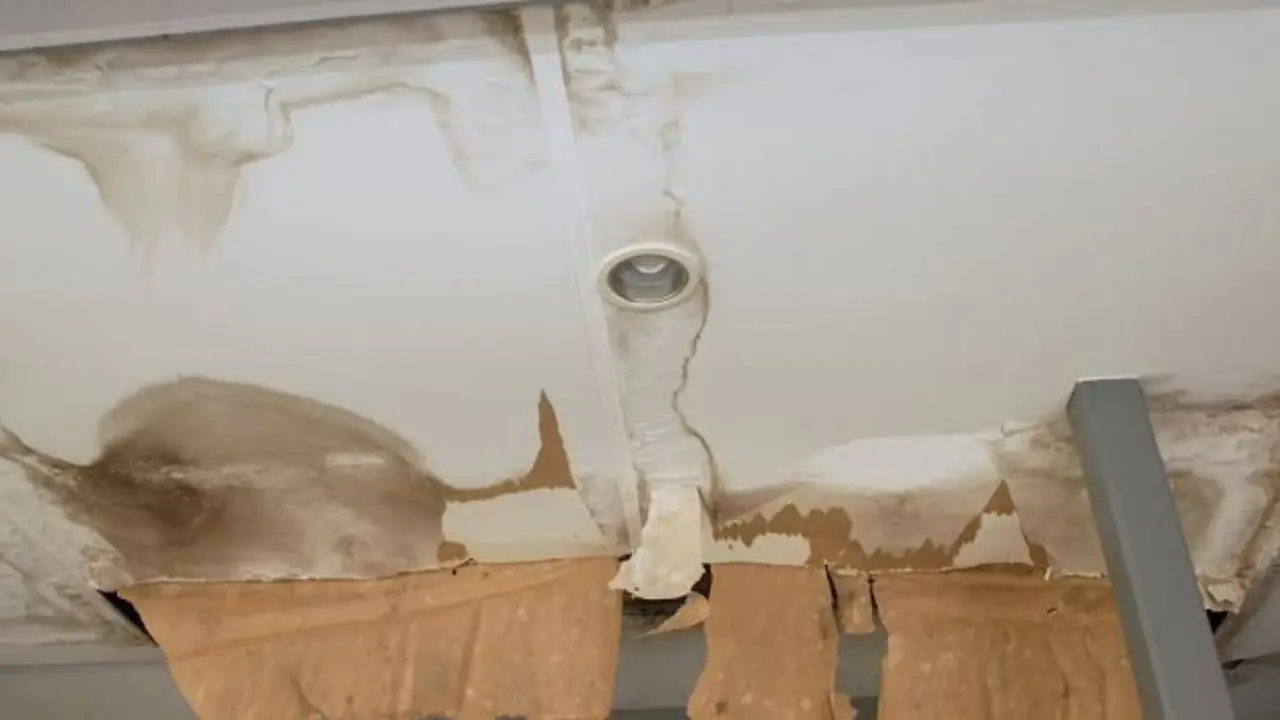
Ceiling water damage repair has a fixed order: stop the leak, dry the ceiling and the space above it, then replace what cannot be saved and paint. Reverse that order and the stain comes back. Painting over a brown spot before the source is fixed is the most common reason people call twice.
If water is dripping or the drywall is bulging, move belongings, protect the floor and call (978) 252-8637. The line is open 24/7, and a crew can read the moisture around the stain before you decide what comes down.
Why the stain is rarely where the leak is
Water does not drop straight down. It runs along roof sheathing, rafters and the top of the ceiling drywall until it finds a seam, a light fixture or a low point. The stain you see can sit several feet from the entry point.
That is why chasing the stain with sealant does not work. The reliable path is to go uphill from the stain, inspect the attic or the cavity above and follow the wet trail back to a hole. A moisture meter and a thermal camera help here because they read what the eye cannot see through paint.
Common sources behind a ceiling stain
Different causes leave different clues. The table below is a quick way to narrow the search.
| What you see | Likely source |
|---|---|
| Stain that shows up only after rain or snowmelt | Roof leak at flashing, a vent, a skylight or worn shingles |
| Stain along an exterior wall after a thaw | Ice dam pushing meltwater under the shingles |
| Ring stain that returns without rain | Plumbing line, bathroom above or air conditioner condensate |
| Wet insulation and frost on the roof deck | Attic condensation from warm indoor air |
| Drip at a light fixture | Water collecting in the cavity and following the wiring |
| Brown stain that grows slowly | Ongoing small leak that has been wet for weeks |
One stain can have more than one cause. A good inspector checks the roof, the attic and the plumbing above before naming a source.
Ice dams and winter leaks
An ice dam forms when heat escaping from the house melts snow on the roof and the water refreezes at the cold edge of the eave. The ridge of ice holds back meltwater, which then backs up under the shingles and into the ceiling below. The fix on the roof side is better insulation and air sealing in the attic, which is a roofer's and an insulator's job.
Never climb an icy roof or chip at an ice dam with a hammer. Chopping tears shingles and creates new leaks. If meltwater is coming in, work from inside. Move furniture, catch the drips and call a restoration crew to dry the ceiling and walls while the roofer handles the exterior.
Water still spreading or mold already showing? Dispatch is open around the clock.
(978) 252-8637Why it comes back
A ceiling stain returns for a few predictable reasons. The source was never found, the cavity above stayed damp, or the patch was painted before the drywall was dry. Damp insulation holds water for a long time and keeps feeding the stain.
Mold can also be part of the story. If drywall stays wet for days, growth can start on the back side, which is why ceilings under roofs and bathrooms are on the usual checklist for mold work. Questions about health effects belong with a physician. If you see growth, see our page on mold remediation.
Temporary measures while you wait
- Place a bucket under the drip and put plastic or a tarp on the floor.
- If the ceiling bulges with trapped water, a small hole at the lowest point of the bulge lets it drain into a bucket. Keep away from light fixtures and turn off power to the room if water is near wiring and the panel is dry.
- Move electronics and furniture, and photograph the damage for your records.
- From outside, only if it is dry and safe, a tarp over the area can slow the entry. Leave steep or icy roofs to professionals.
Do not cover a wet ceiling with fresh paint. Do not seal the stain with primer and call it done.
How a ceiling is repaired
Once the roof or the plumbing is fixed and the space is dry, the repair is routine.
- Find and fix the source.Roofing, plumbing or ventilation work comes first.
- Remove wet material.Soaked drywall and insulation are cut out, usually with a margin past the visible edge.
- Dry the cavity.Air movers and a dehumidifier run until framing and neighboring drywall reach a dry standard.
- Patch or hang new drywall.New board is fastened, taped and finished smooth.
- Prime and paint.A stain-blocking primer goes on, followed by paint across the whole ceiling plane so the repair does not show.
Ceiling texture is often the hardest part to match, so ask how the crew plans to blend it. Our water damage cleanup page covers debris and sanitizing when the water was dirty, and water damage repair covers the rebuild itself.
Cost factors and insurance
Price depends on how much ceiling is wet, whether insulation and framing are involved, the height and texture of the ceiling, drying days and how many rooms the repair touches. Roof and plumbing repairs are separate trades and are priced separately. Scope and price are explained before work starts.
Insurance is general here. Sudden and accidental damage, such as a storm tearing off shingles, is often covered. Gradual leaks from wear often are not, and flood needs separate coverage. Check your policy and ask your insurer, and photograph the roof and ceiling before repairs.
Amesbury local note: freezing days and steady rain
The National Weather Service normals for the Boston area, covering 1991 to 2020, count 91.6 days a year with a low at or below freezing. That is a lot of freeze and thaw cycles for roofs and attic edges, so have the roofline, vents and attic insulation looked at before a hard cold stretch instead of after the first stain shows up.
The same normals put annual precipitation in the Boston area at 43.59 inches. A roof that sheds that much rain and snow over the course of a year will find any weak flashing, so a stain that appears after weather rather than after plumbing use points to the roof first.
Ceiling leak questions
Should I cut a hole in a sagging ceiling?
A bulge full of water can collapse, so draining it through a small hole at the lowest point is safer than waiting. Keep clear of fixtures and wiring, and use a bucket. Then call for an inspection.
Can I just paint over a ceiling stain?
Not until the source is fixed and the ceiling is dry. Paint and primer hide a stain but do not stop a leak, and the mark usually reappears.
How long does a wet ceiling take to dry?
Drywall surfaces dry in days, but insulation and framing above can take longer. Crews read moisture and stop equipment only when readings match a dry reference.
Who fixes the roof, a restoration company or a roofer?
A roofer fixes the roof. A restoration crew dries the structure, removes damaged ceiling and rebuilds the interior. The two jobs run in a sensible order, with the source first.
Why do ceilings in Amesbury stain after a thaw?
Meltwater from ice dams can back up under shingles when the eave is still frozen. With 91.6 freezing days a year in the Boston area, those conditions repeat, so address attic heat loss at the source.
If a stain or drip is spreading in Amesbury, the 24/7 line at (978) 252-8637 is the place to start. Homes in West Newbury and Merrimac are served from the same dispatch, and the first stage of any wet-structure job is covered under water mitigation.