
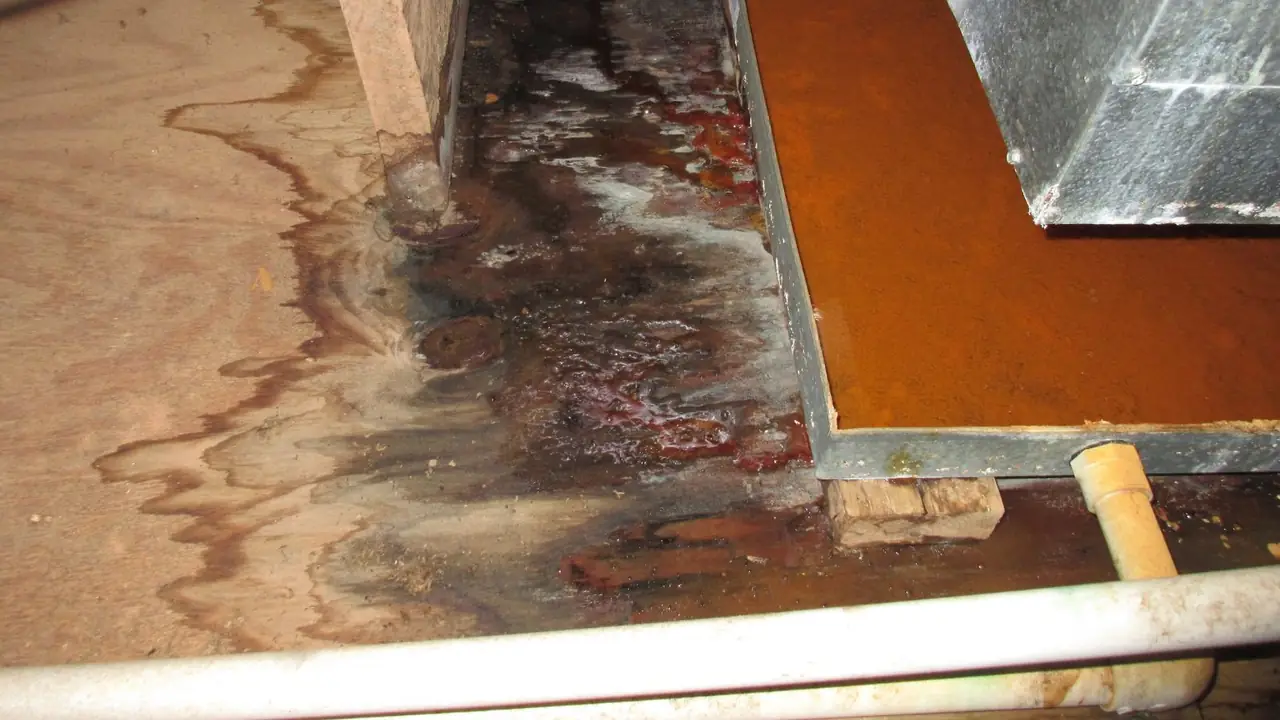
Do not sand a wet floor. That is the mistake that ruins the most hardwood after a leak. Boards swell when they absorb water and shrink as they dry, and the repair only makes sense once the wood and the subfloor under it have settled at a normal moisture level.
If water reached your hardwood in the last day or two, call (978) 252-8637. Dispatch is open 24/7 and can start drying before the boards lock into a permanent shape.
What water does to a wood floor
Solid and engineered hardwood is hygroscopic, which means it takes on and gives up moisture with the air around it. When a floor gets soaked from above or from below, the boards swell. The problem is that they swell unevenly, and the shape they take tells you where the water came from.
Cupping is the most common result. The edges of each board rise higher than the center, which usually means moisture came from below, such as a slab, crawlspace or leaking pipe. Crowning is the reverse, with a raised center, and it often shows up after a cupped floor was sanded too early. Buckling is the worst case, where boards lift off the subfloor in a ridge or tent.
Cupping, crowning and buckling compared
Each symptom points to a different repair path, so match what you see before you decide.
| Symptom | What it usually means | Likely repair |
|---|---|---|
| Light cupping | Moisture from below, caught early | Slow drying, then often sand and refinish |
| Crowning | Boards were sanded while wet or dried unevenly | Wait for stable readings, then sand again |
| Buckling | Heavy saturation, boards lifted | Remove and replace affected boards, check subfloor |
| Gaps and staining | Long exposure or old leak | Board replacement, refinish to blend |
| Black staining and soft wood | Rot or mold in the boards | Replace section or full floor |
Sheet vinyl and laminate often look similar, but they react differently. If you are not sure what you have, a crew can pull a floor register and look at the edge of a board.
Slow, controlled drying comes first
Hardwood should not be dried fast. Pushing hot, dry air across a wet floor can split boards and set cups permanently. Crews use air movers to circulate air, LGR dehumidifiers to pull moisture from the room, and sometimes a mat system that draws moisture out through the floor surface.
A moisture meter takes readings on the boards, the subfloor and a dry reference board elsewhere in the house. The floor is dry when those numbers match. That can take a week or more for dense oak, and rushing it is how flat floors turn into rolling ones. When drying works, many cupped floors flatten by themselves and need only a light sanding.
Water still spreading or mold already showing? Dispatch is open around the clock.
(978) 252-8637Check the subfloor before you pick a repair
A pretty floor over a wet subfloor is a bad bet. Plywood and board subflooring hold water longer than the finish does, and they can grow mold if trapped under new boards. Before any sanding or installation, crews check the subfloor with a meter and, where needed, lift a few boards to look.
Moisture trapped below can also telegraph through new boards months later. If the subfloor is damaged, the section is cut out and replaced. That work is part of water damage repair, and it comes after the structure has reached a dry standard in water mitigation.
Sand and refinish, board replacement or full replacement
Most homeowners face three paths.
- Sand and refinish.Best for light cupping or crowning after the floor has dried flat. A drum or orbital sander removes the top layer, then stain and finish go on in coats.
- Replace damaged boards.Best when only part of the room is buckled or stained. New boards are interwoven with the old, then the whole floor is sanded so the color blends.
- Replace the full floor.Best when most boards are warped, rotted or loose, or when the subfloor needs major work. It costs the most but resolves the issue.
A thin engineered floor can usually be sanded only once or twice, because the wear layer is shallow. Solid hardwood can handle several refinishes. This is one reason to ask what you have before choosing.
What affects the cost
No honest quote comes from a photo alone. Hardwood repair varies with a few things, and scope and price are explained before work starts.
| Cost factor | Why it matters |
|---|---|
| Water category | Contaminated water means removal, not refinishing |
| Area affected | A hallway is a different job than an open kitchen and living room |
| Species and type | Solid oak, pine and engineered boards behave differently |
| Drying days | Slow drying takes longer but saves more of the floor |
| Rebuild scope | Subfloor work, new boards, sanding and finish are separate lines |
Insurance basics
A sudden and accidental event, such as a burst pipe or a failed dishwasher line, is often covered by a homeowners policy. Gradual seepage often is not, and flood from outside needs separate flood coverage. Check your policy and ask your insurer, and photograph the floor before any boards come up.
Amesbury local note: old floors, old layers
A state housing plan citing American Community Survey data lists 35 percent of Amesbury homes as built before 1940. Many of those homes have old hardwood laid over plaster ceilings, lath and older subfloors beneath. The practical takeaway is that a leak above a first-floor room can wet the plaster too, so ask the crew to check the ceiling below as well as the floor.
Permit rules are a separate question. The city's Inspectional Services page does not say whether floor or drywall repair after water damage needs a permit, so ask Inspectional Services before you start. Work started without a permit can be charged at double the fee, so it is worth one phone call.
If your home was built before 1978, the EPA's Renovation, Repair and Painting rule applies to paid work that disturbs paint. Sanding an old finish near painted trim is a case to raise with any contractor, so ask whether the rule applies to your job.
Homes in Newburyport and Haverhill often have the same older floors, and the same slow-drying approach applies there.
Hardwood floor questions
Will cupped hardwood go flat on its own?
Often, if the water source is stopped and the floor dries slowly. Wait for stable moisture readings before deciding on sanding. Sanding too early can leave the floor crowned.
How long should I wait before sanding?
Until the boards and subfloor read dry against a reference board, which can take weeks for thick or dense wood. A meter is the only reliable check.
Can buckled hardwood be saved?
Sometimes if only a few boards lifted and they can be dried and re-fastened. Heavy buckling usually means replacing those boards and checking the subfloor.
Is engineered flooring harder to fix than solid hardwood?
Often, because the wear layer is thin and glued flooring can delaminate when wet. Solid boards can usually be sanded more times.
Do I need a permit for hardwood repair in Amesbury?
The city page does not say whether repair after water damage requires one. Ask Inspectional Services before work begins.
For a floor that has been wet for more than a day, the 24/7 line at (978) 252-8637 is the place to start.