
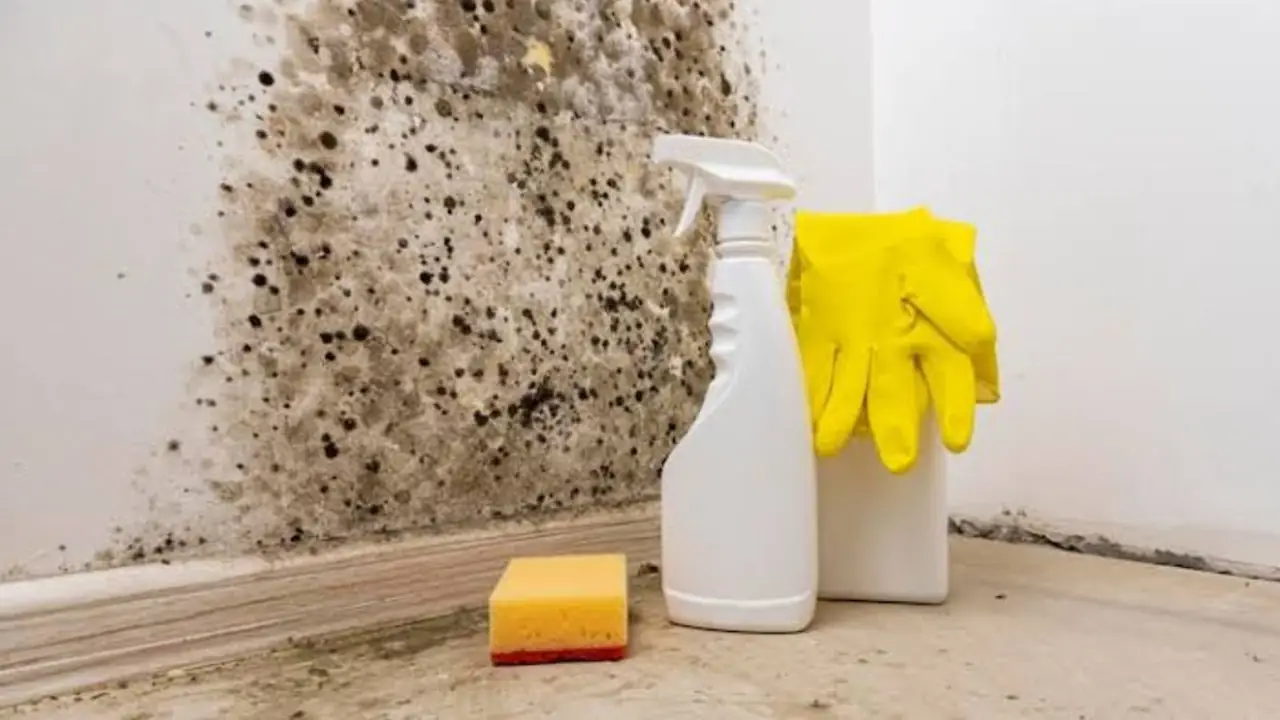
You get rid of mold by removing it and then removing the moisture that fed it. Small spots on hard surfaces such as tile, glass and sealed wood can be cleaned with detergent and water. Mold in drywall, insulation, ceiling tile or carpet cannot be cleaned in place, so those materials get cut out and thrown away. If you skip the second part and leave the leak, the mold returns.
If the patch is bigger than you can handle or you cannot find the source, call (978) 252-8637. Dispatch is open 24/7 and can explain how an inspection works.
Fix the water first
Mold needs a damp surface. Before you scrub anything, find out why it is damp. A dripping supply line, a roof leak, a dryer vent that exhausts into the attic, a bathroom fan that does not vent outside, a wet basement wall or a window that sweats all winter can each feed growth.
Fix or contain the source, then dry the area. Open windows if the outside air is drier, run a dehumidifier and use fans. The Massachusetts homeowner guide tells owners to dry wet areas within 24 hours, and the state Housing Code requires leaks and floods to be dried within 48 hours. Cleaning a wall that is still wet is wasted effort.
Small or large: a quick decision table
Size and material decide who should do the work. These are rules of thumb, not a legal standard.
| Situation | What to do |
|---|---|
| A few small spots on tile, glass or sealed surfaces | Clean with detergent and water, then dry completely |
| Spots on painted drywall that wipes clean and the wall is dry | Clean carefully and watch for return |
| Growth on drywall that is soft, stained or was wet for days | Cut out and replace the damaged section |
| Insulation, ceiling tile or carpet pad with mold | Remove and throw away |
| Mold across a large area or in multiple rooms | Call a professional for containment and removal |
| Mold inside walls, in ductwork or near an unknown leak | Call a professional before disturbing anything |
| Recurring musty smell with no visible source | Get an inspection with a moisture meter |
When in doubt, treat it as the larger case. Disturbing a big patch without containment moves spores to clean rooms.
How to clean a small patch
Hard, nonporous surfaces clean up without special products.
- Protect yourself.Wear gloves, eye protection and a mask rated for dust. Questions about health effects belong with your physician.
- Ventilate.Open a window or run a fan that exhausts outside, and keep the door to the rest of the house closed.
- Wet the surface lightly.Do not brush dry mold, since that puts spores into the air.
- Scrub with detergent and water.Wipe with a cloth or soft brush and rinse with clean water.
- Dry fully.Use a fan and a dehumidifier, then check the spot again over the next few days.
- Bag the rags.Seal cloths and sponges in a plastic bag and discard them.
Do not mix cleaning products. Bleach and ammonia produce a hazardous gas, and mixing them is a common mistake. Bleach is also a poor tool on porous surfaces, because it does not reach below the surface of drywall or wood.
Water still spreading or mold already showing? Dispatch is open around the clock.
(978) 252-8637What gets thrown out
Porous materials cannot be cleaned once mold grows through them. That includes drywall, insulation, ceiling tile, carpet and carpet pad, and unsealed particleboard. The state guide advises discarding porous materials that cannot be dried quickly, and that is the right default after a leak that sat for days.
Solid wood framing is different. It can usually be cleaned and dried, and crews do this with HEPA vacuuming and damp wiping. Do not throw out structural lumber without an inspection. Removed materials should be bagged in plastic before they travel through the house, and painted materials in houses built before 1978 may trigger lead-safe rules for paid contractors.
When to call a professional
Call when the area is large, when the mold is inside a wall or you smell it but cannot find it, or when a flood or sewage backup was involved. Call also when you are buying or selling and need a documented result, or when removal would mean opening painted surfaces in an older house.
A professional job includes a source search with a moisture meter and thermal camera, plastic containment, negative air machines, HEPA filtration, removal and drying, then a way to verify the result. That work follows the ANSI/IICRC S520 standard for mold remediation, and the state does not license it, so ask any company how it works and what it documents. See mold remediation for the full process.
If the cause was a leak, the first stage is water mitigation, which dries the structure before anything is rebuilt.
What affects the cost of professional help
Price follows the area, the materials, the containment needed, the drying days and the rebuild scope. A small patch found early is a smaller job than one found behind a wall after months of seepage. Scope and price are explained before work starts, and rebuild is priced separately from removal.
Insurance may help when mold follows a covered sudden and accidental water loss, and gradual leaks often are not covered. Check your policy and ask your insurer. No company can promise mold will never come back, so the dry fix is the thing to insist on.
Amesbury local note: older homes and damp basements
A state housing plan citing American Community Survey data from 2011 to 2015 found that 35 percent of Amesbury's housing units were built before 1940. Houses that old often have stone or brick foundations and basements where moisture lingers, so run a dehumidifier in the basement and check the foot of the walls and under the stairs if you notice a musty smell.
The same state guide that says to dry wet areas within 24 hours also points to the 48 hour limit in the Housing Code. If your Amesbury home has a leak or damp rooms, treat those as your deadlines for drying and for tossing materials that cannot dry quickly.
Getting rid of mold questions
What is the fastest way to get rid of mold?
Fix the moisture, then clean hard surfaces with detergent and water or remove porous materials. There is no instant fix. Skipping drying means the mold returns.
Does vinegar or bleach kill mold on drywall?
Neither solves mold in drywall. Porous material holds growth below the surface, so the damaged drywall is cut out and replaced. Never mix cleaning products.
How do I know if the mold is gone?
The surface looks clean, the smell is gone and moisture readings show the area is dry. For a lender or buyer, an independent tester can sample after the work.
Will mold come back after I clean it?
It can if moisture returns. Keep humidity down, fix leaks promptly and ventilate bathrooms and basements. No cleaning method can promise permanence.
Why do Amesbury basements smell musty after rain?
Older foundations hold moisture, and 35 percent of units in the city were built before 1940 per a state housing plan. Run a dehumidifier, check the walls for dampness and have an inspector look if the smell stays.
If you are not sure what you are looking at, call the 24/7 line at (978) 252-8637 and ask. Crews also work in Newburyport and Haverhill.