
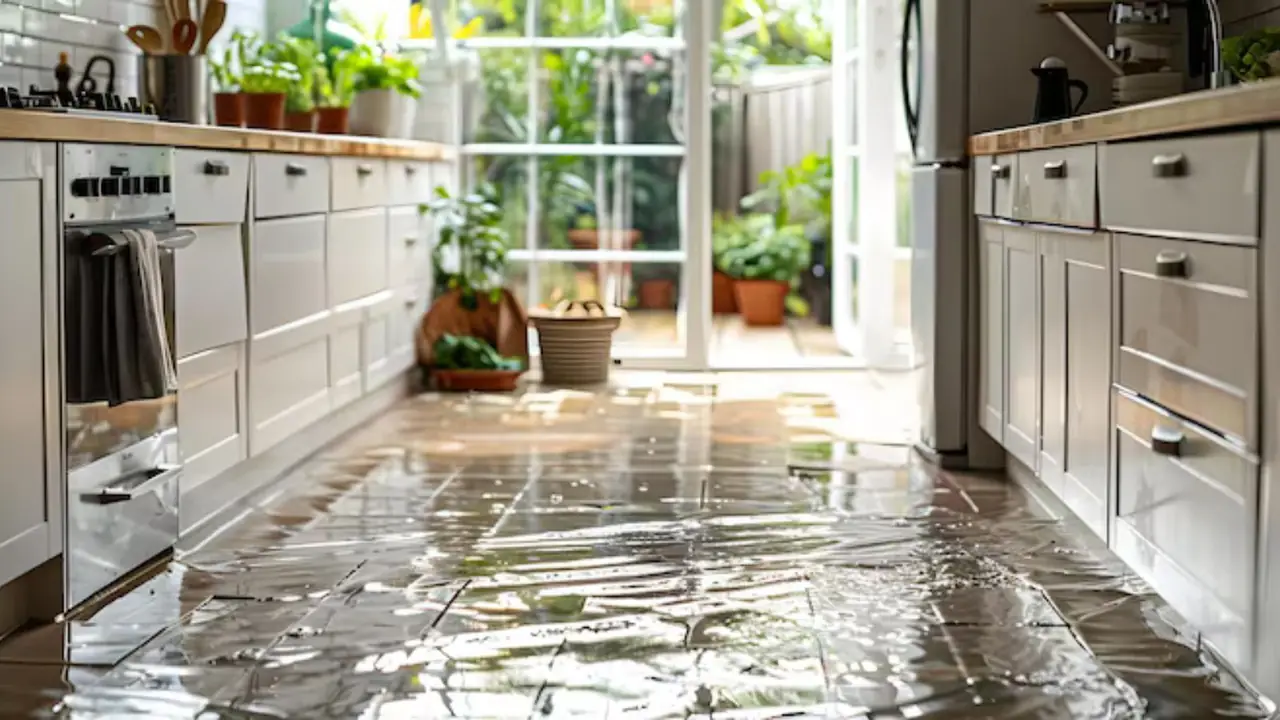
Pull the fridge out, shut off its water line, and find out how far the water went before you mop. That is the whole answer in one breath. A leak from an ice maker line or water dispenser is usually clean supply water at first, but it is rarely a single puddle, and the damage you cannot see under the flooring is what costs money.
If the floor around your refrigerator is wet right now, turn off the shutoff valve behind or beside it, unplug the unit if you can reach the outlet without standing in water, and call (978) 252-8637. Dispatch is open 24/7 and will tell you what to do while you wait.
Why refrigerator leaks go unnoticed
Most fridge leaks are slow. A pinhole in the plastic ice maker tube, a loose compression fitting or a cracked water filter housing can drip for weeks. The water runs under the appliance, finds the lowest point of the floor and soaks in at the edges where nobody looks.
Signs show up late. Vinyl plank lifts at the seams, a hardwood board cups beside the unit, the cabinet toe kick swells, or a musty smell comes from the kitchen on a humid day. By then the moisture has often reached the subfloor.
Where the water actually goes
Water follows gravity and then capillary action. It spreads under flooring, wicks up into the bottom of the cabinet base and creeps into the wall behind the appliance. In a basement or crawlspace below, a stain on the ceiling may be the first clue.
| What is wet | What to look for | Usual outcome |
|---|---|---|
| Finished floor | Cupping, lifted seams, soft spots | Dries if caught early, replaced if swollen |
| Subfloor | Dark staining, spongy feel, odor | Dried in place or cut out in sections |
| Cabinet base and toe kick | Swelling, peeling laminate | Particleboard rarely recovers |
| Wall behind the unit | Bubbling paint, damp baseboard | Drywall opened and dried or replaced |
| Ceiling or basement below | Brown stain, drip | Check the cavity, dry before it grows mold |
Particleboard and MDF cabinet bases are the usual casualties. Solid wood and plywood handle moisture better, which is why a crew will probe them with a moisture meter rather than guess.
What to do in the first hour
Act in this order and you protect most of the kitchen.
- Stop the water.Close the small valve on the supply line behind the refrigerator. If it will not turn, shut off the main interior valve.
- Cut the power if it is safe.Unplug the fridge only if the outlet and floor around it are dry. If not, leave it and call.
- Move the contents.Transfer food to a cooler so you can slide the appliance out. Do not tip it onto wet flooring.
- Soak up the surface.Use towels and a wet vacuum on standing water and pull up any loose mats or rugs.
- Photograph everything.Take pictures of the source, the floor and the cabinets before anything is moved or thrown away.
- Call for a moisture check.A meter and thermal camera show how far the water traveled under the surface.
Run a fan across the floor and open the cabinet doors beside the fridge while you wait. That helps, but it does not replace equipment.
Water still spreading or mold already showing? Dispatch is open around the clock.
(978) 252-8637Clean water, and when time makes it worse
Water from an ice maker or dispenser line starts as Category 1, meaning it comes from a sanitary supply. That category does not stay that way. Under the ANSI/IICRC S500 standard for water damage restoration, clean water that sits on porous material and warms up for a day or two can be treated as Category 2. A slow leak that has run for weeks, soaked insulation or grown mold is handled with more care than a fresh spill.
For that reason crews ask three questions: how long did it leak, what did it touch, and is anything growing. A drip you caught within hours is a drying job. A leak behind a cabinet for a month is a tear-out job, and the mold side is covered in mold remediation.
How cleanup and drying work
Extraction units and wet vacuums remove the water you can reach. Then the crew tests the materials. Moisture meters read wood and drywall, and a thermal camera shows cool, wet areas behind surfaces.
Wet kitchen flooring often has to be lifted so the subfloor can breathe. Small holes drilled at the toe kick let air move into the cabinet cavity. Air movers push dry air across the surface while an LGR dehumidifier pulls moisture from the room. Crews return to read the meters until the wood matches a dry reference.
Debris removal, odor control and sanitizing belong to water damage cleanup. Once the structure is dry, rebuilding the floor and cabinet base falls under water damage repair.
What affects the cost
You will not get an honest flat number over the phone, because the scope depends on what is wet. Scope and price are explained before work starts.
| Cost factor | How it changes the job |
|---|---|
| Duration of the leak | Weeks of seepage means more material to remove |
| Water category | Clean supply water is simpler than water that has aged |
| Flooring type | Hardwood and engineered boards need slow, careful drying |
| Area affected | A larger footprint needs more air movers |
| Rebuild scope | New flooring and cabinet bases are priced after drying |
Insurance basics
Sudden and accidental leaks, like a burst supply line, are often covered by a homeowners policy. Gradual leaks that ran unnoticed for a long time often are not. Read your policy and ask your insurer, and photograph the appliance, the line and the damage before cleanup begins.
Amesbury local note: find your own shutoff
The City of Amesbury describes the curb stop as the valve that shuts water off from the water main to the water service. That valve belongs to the city side of the system, and the city page gives homeowners no instructions to find or use it. Practically, learn where your interior shutoff and the small appliance valve are today, before a leak, and do not plan on reaching the curb stop in an emergency.
Amesbury's public water comes mainly from the Powow River, supplemented by Tuxbury Pond, Lake Attitash and Meadowbrook, according to the city's 2024 water quality report. The takeaway for a fridge leak is simple. Whatever the source, the water that leaves your ice maker line was treated supply water, and what turns it into a bigger problem is the time it sits in your flooring.
If the leak reached a neighbor's unit or a downstairs ceiling, your landlord or condo board should hear about it right away. Households next door in Merrimac and Salisbury deal with the same kitchen problems, and the same steps apply there.
Fridge leak questions
Can I fix a fridge leak and skip professional drying?
If you caught it within hours and only a surface puddle formed, towels, a wet vacuum and fans may be enough. If the water went under the flooring or into the cabinet base, a meter reading is the only way to know it is dry.
How do I find a slow refrigerator leak?
Pull the unit out, check the ice maker tube and the fittings with a dry paper towel, and look for stains or soft flooring around the base. A moisture meter finds what your eyes cannot.
Is fridge leak water safe to touch?
Fresh water from a supply line is clean, but water that has sat for days may not be. If it has aged or touched other materials, treat it with caution and let a crew assess it.
Will my insurance pay for a refrigerator leak?
Often if the leak was sudden and accidental, and often not if it was gradual. Check your policy and ask your insurer.
Where is the water shutoff for my Amesbury home if the fridge valve fails?
Look for the main interior shutoff where the water line enters the house, often in the basement or utility area. The city's curb stop is a separate valve and the city gives no homeowner instructions for it.
If your kitchen floor feels soft or damp after a leak, the 24/7 line at (978) 252-8637 is the next call to make.