
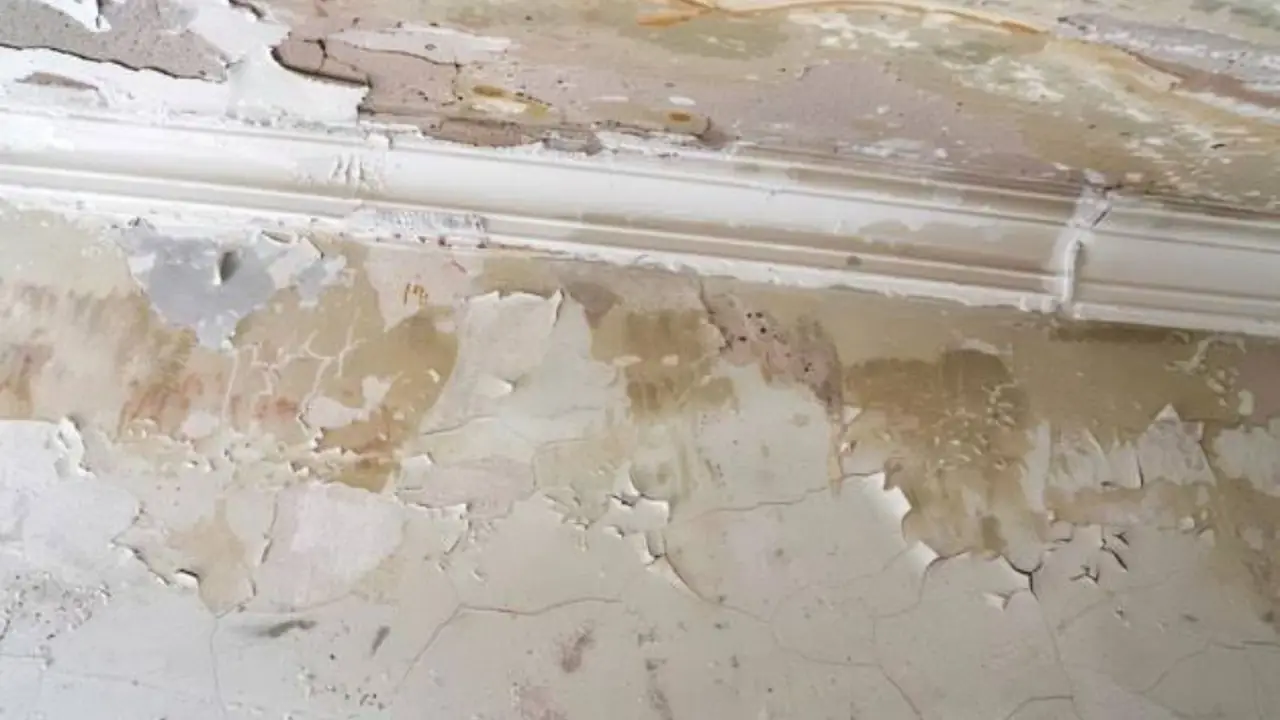
The short answer is that water behind a wall almost always leaves a sign somewhere, but the sign is often not on the wall that is wet. Look for stains, paint that bubbles or peels, baseboards that lift, a musty smell and a spot that feels cooler or warmer than the wall around it. If two or more of those show up together, treat the wall as wet until a moisture meter says otherwise.
Most hidden leaks in Amesbury, MA homes start small. A pinhole in a copper line, a loose fitting on a washer box or a failed tub drain can drip for weeks inside a cavity before anything shows. By then the insulation is soaked and the back of the drywall is soft.
What you can see and smell
Start with your eyes. A brown or tan ring that grows after rain or after someone showers points to a slow, repeated source. Paint that blisters, drywall tape that shows through as a ridge and wallpaper that lets go at the seams all mean moisture is pushing outward from inside the wall.
Then use your nose. A musty or earthy smell in one room that fades when the door is open is a classic sign of a wet cavity. Press a flat hand on the wall in several places. Drywall that feels soft, cool or slightly damp deserves a closer look, even if it looks fine.
Warm spots, cool spots and sounds
Wet materials hold temperature differently than dry ones. Evaporation makes a wet patch feel cooler to the hand, and a leaking hot supply line can make a patch feel warm. Neither test is proof, but both help you decide where to point a meter.
Sound can help too. A faint hiss or drip inside a wall when every fixture is off suggests a pressurized line is leaking. Check your water meter with all fixtures closed. If the dial keeps turning, water is going somewhere, and the wall is a likely place.
How a pro confirms it
A restoration crew does not guess. A pin or pinless moisture meter reads how wet the drywall, trim and framing are. A thermal imaging camera shows temperature patterns across the whole wall, which makes wet zones visible without cutting anything. The two tools together tell the crew how far the water traveled.
Readings are compared to a dry reference taken from an unaffected wall in the same house. If the suspect wall reads well above that number, the material is wet. For a closer look at the process, our water mitigation page lays out how drying is planned and measured.
Water still spreading or mold already showing? Dispatch is open around the clock.
(978) 252-8637When the wall has to be opened
You do not open every wall that reads damp. The decision depends on what is wet and how long it has been wet.
| What the meter and camera show | Usual next step |
|---|---|
| Drywall slightly above dry reference, no stain, recent leak | Fix the source, set drying equipment and recheck |
| Wet insulation inside the cavity | Open the wall and remove the insulation |
| Soft, stained or swollen drywall | Cut out the damaged section |
| Visible mold or a strong musty smell | Open, contain and treat as a mold job |
| Dry readings after drying | Leave the wall closed and repair the cosmetic damage |
Small inspection holes are often enough to vent a cavity and let air movers do their work. Larger removal is kept for material that cannot dry in place, such as saturated fiberglass or paper-faced board that has been wet for days.
What to do while you wait
If you suspect a wet wall, act in this order.
- Stop the water.Close the fixture shutoff or the main valve if you can reach it safely.
- Protect the power.If outlets or switches in the wall are wet, leave the breaker alone unless the panel is dry, and call an electrician if you see sparks or smell burning.
- Take photos.Capture stains, bubbles and any water you can see, with a date on the shot.
- Move belongings away.Pull furniture and stored boxes at least a few feet off the wall.
- Call for a reading.A meter check before you cut anything saves guessing and wasted repair.
Do not drill into a wall near wiring or pipes to see what is inside. Do not paint over a stain to hide it, because paint seals moisture in and the stain returns.
Amesbury local note: older framing and permits
A state housing plan citing American Community Survey data lists 35 percent of Amesbury housing units as built before 1940. Older framing often has long open cavities, so a leak on an upper floor can run down inside a wall and show up as a stain two floors below. In a home of that age, check the room beneath a bathroom or kitchen even when the room above looks dry.
If a wall does need to be rebuilt after drying, the work may need a permit. Amesbury Inspectional Services takes permit filings online only, and the city page does not say whether drywall repair after water damage needs one, so ask Inspectional Services before you start.
The city also charges double the permit fee for work started without a permit, with a $400 minimum. Settling the question first is cheaper than correcting it later.
What drives the cost
Price depends on the water category, the area involved, the materials, the number of drying days and the scope of the rebuild. A clean supply line leak caught in a day is a smaller job than a drain leak that soaked insulation for a month. Scope and price are explained before work starts, and repair is priced separately from drying.
If your wall needs new board, paint and trim after it dries, see water damage repair for how that stage works. Neighbors in nearby towns ask the same questions, and our Newburyport and West Newbury pages cover those service areas.
Questions about hidden wall damage
Can water damage behind a wall go away on its own?
The surface may dry, but wet insulation and framing usually hold moisture for a long time. Without airflow or removal, the cavity stays damp, and that is how rot and mold start. Have it measured rather than waiting.
How do I tell a leak from condensation?
Condensation tends to appear on cold exterior walls and windows in winter and fades when the air dries. A leak keeps growing and often follows a particular fixture or rainfall. A meter reading settles it.
Is a thermal camera enough on its own?
No. It shows temperature patterns, not moisture itself. A crew pairs it with a moisture meter to confirm that a cool patch is actually wet.
Do old Amesbury houses hide leaks more than newer ones?
Often yes. Homes built before 1940 can have open framing cavities that let water travel, so the stain may appear far from the source. Check rooms above and below the damp spot.
Does insurance cover water behind walls?
Sudden and accidental damage such as a burst pipe is often covered, and gradual leaks often are not. Flood needs separate flood coverage. Check your policy and ask your insurer.
If you notice a stain, a bubble or a smell and cannot tell how far it goes, the 24/7 line at (978) 252-8637 is staffed day and night, and dispatch can walk you through the next safe step.