
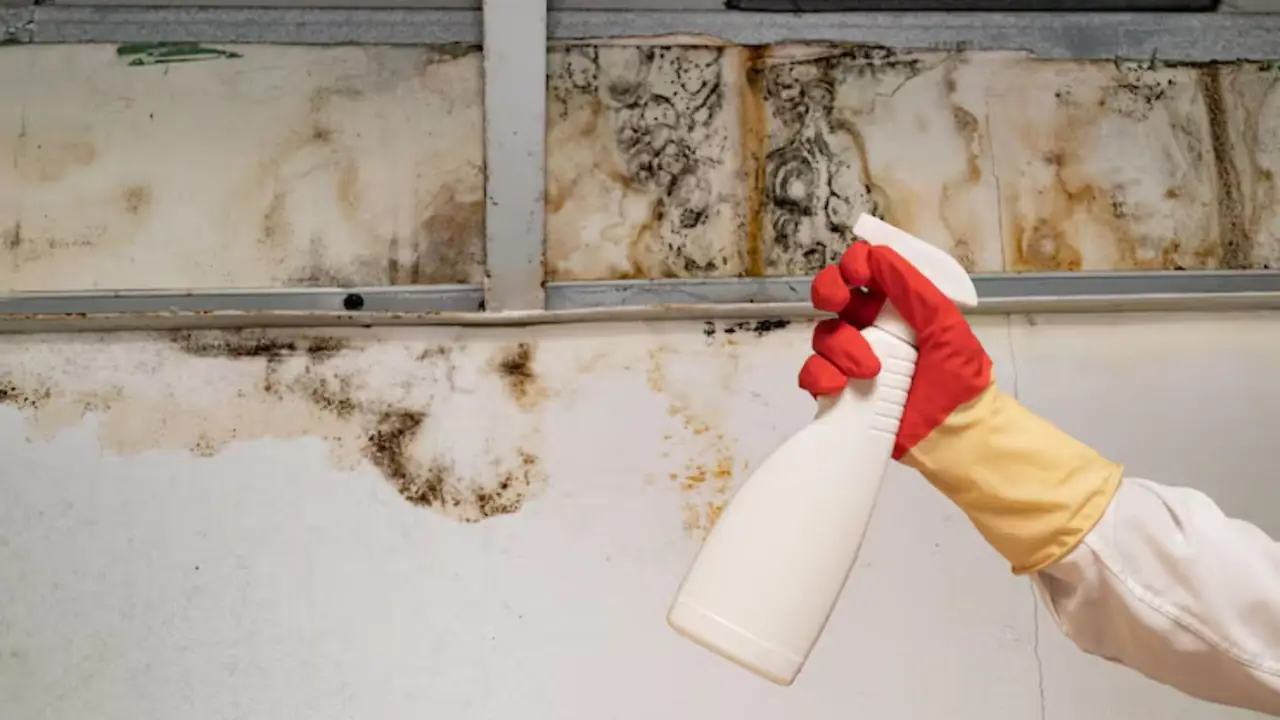
Nothing kills black mold instantly. Sprays, fogs and cleaners can change how a surface looks in seconds, but the growth is not gone, and the dampness that fed it is still there. What actually works is removing the mold or the material it grew in, then drying the area and fixing the leak.
Black mold is a color, not a species, and many molds look dark. Treat any dark growth the same way: find the water, decide if the material can be cleaned or must go, and avoid shortcuts. If you want help, call (978) 252-8637. Dispatch is open 24/7.
Why instant fixes do not exist
Mold is not like a bug you spray. Growth puts down fine threads into the surface it lives on. On a wall tile it stays near the top, so a wipe can take it off. In drywall, wood, grout or insulation those threads go deep, and a surface treatment cannot reach them.
Even if a product kills what it touches, dead mold is still on the wall. It has to be removed, not just discolored. And if the material stays damp, new growth starts from spores that are already in the air of almost every home.
What actually works
Four things matter, in this order.
- Stop the moisture. Repair the leak, vent the bathroom fan outside and run a dehumidifier.
- Remove the mold. Clean hard surfaces with detergent and water. Cut out and discard porous materials.
- Dry the area. Air movers, fans and dehumidifiers bring it to a dry standard.
- Check the result. The surface is clean, the smell is gone and readings show the structure is dry.
The Massachusetts homeowner guide says to dry wet areas within 24 hours and to discard porous materials that cannot be dried quickly. Those two rules do more than any bottle on a shelf.
Bleach, vinegar and other common answers
People reach for what is under the sink. Here is how the usual choices hold up.
| Product or method | What to know |
|---|---|
| Bleach | Poor on porous surfaces because it does not reach below the surface. Can discolor and leave moisture behind |
| Vinegar | A mild acid that may work on some hard surfaces, but it does not fix drywall or wood |
| Detergent and water | The standard for small spots on hard, nonporous surfaces, followed by thorough drying |
| Painting over it | Hides the stain and traps moisture, so growth returns |
| Fogging or ozone machines | Do not replace removal of the contaminated material |
| Cutting out the damaged material | The dependable fix for drywall, insulation and ceiling tile |
No product promises that mold will not return. Mold stays away only when moisture does.
Water still spreading or mold already showing? Dispatch is open around the clock.
(978) 252-8637What not to do
Do not mix cleaning products. Bleach with ammonia makes a toxic gas, and mixing other cleaners can do the same. Use one product at a time, with ventilation, and rinse between them.
Do not brush or sand dry mold. That sends spores into the air and across the house. Wet the surface lightly if you must clean, or leave it to a professional. Do not run the central air or heating system while you work, because ducts carry material through the house.
Do not tear into painted plaster or trim in an older home until you know the paint situation, since lead-safe rules apply to paid work in houses built before 1978.
Health questions belong with your physician. This page makes no health claims and does not diagnose.
When removal needs a professional
Small spots on tile or glass are a household job. Call for help when the growth is large, inside a wall or ceiling, in more than one room, or after a flood or sewage backup. Call also when the smell persists and you cannot find the source.
A professional job follows the ANSI/IICRC S520 standard for mold remediation and includes a moisture meter and thermal imaging search, containment, negative air, HEPA filtration, removal and drying. The state does not license it, so ask how the company works and what it documents. For the full process see mold remediation, and for wet structures that need drying first see water damage cleanup.
Cost and insurance in general terms
Price depends on the area affected, the materials, containment, drying days and the rebuild that follows. Scope and price are explained before work starts. A job found early is smaller than one found after months of hidden seepage.
Insurance may respond when mold follows a sudden and accidental covered loss, while gradual leaks often are not covered and flood needs separate coverage. Check your policy and ask your insurer, and photograph the damage before anything is removed.
Amesbury local note: flash floods and wet basements
In 2023 the City of Amesbury posted a notice about flash flooding after a summer storm. It told residents with flood damage to file an insurance claim immediately and suggested a sump pump for homes that regularly flood. If your basement took on water, document it with photos, call your insurer and get the space drying quickly, because mold follows damp materials left in place.
The Boston-area normals from the National Weather Service put annual precipitation at 43.59 inches. A year of that much rain and snowmelt keeps foundations and gutters working hard, so check that downspouts carry water away and that basement walls stay dry between storms.
Black mold questions
Does bleach kill black mold?
Bleach is a poor choice on porous surfaces because it does not reach below the surface. On hard surfaces, detergent and water work without the risks of mixing. Removing damaged porous material is the dependable fix.
Is there a spray that kills mold instantly?
No product removes mold in seconds. Some sprays kill what they touch, but the growth is still there until it is removed, and it returns if the area stays damp.
Can I paint over mold with mold-resistant paint?
Not as a fix. Paint on a wet surface traps moisture. Remove the growth and dry the area first, then paint if you want.
How do I tell black mold from dirt?
Dirt wipes off clean, and mold often smears, has a musty smell or comes back. An inspector or a test can tell you what you have. Health questions belong with a physician.
What should an Amesbury homeowner do after a flash flood in the basement?
Photograph the damage, file a claim as the city advises and remove standing water. Dry the space within 24 to 48 hours, and discard porous materials that cannot dry quickly.
If you are looking at dark growth in Amesbury, the 24/7 line at (978) 252-8637 can explain what an inspection involves. Crews also serve Salisbury and West Newbury.